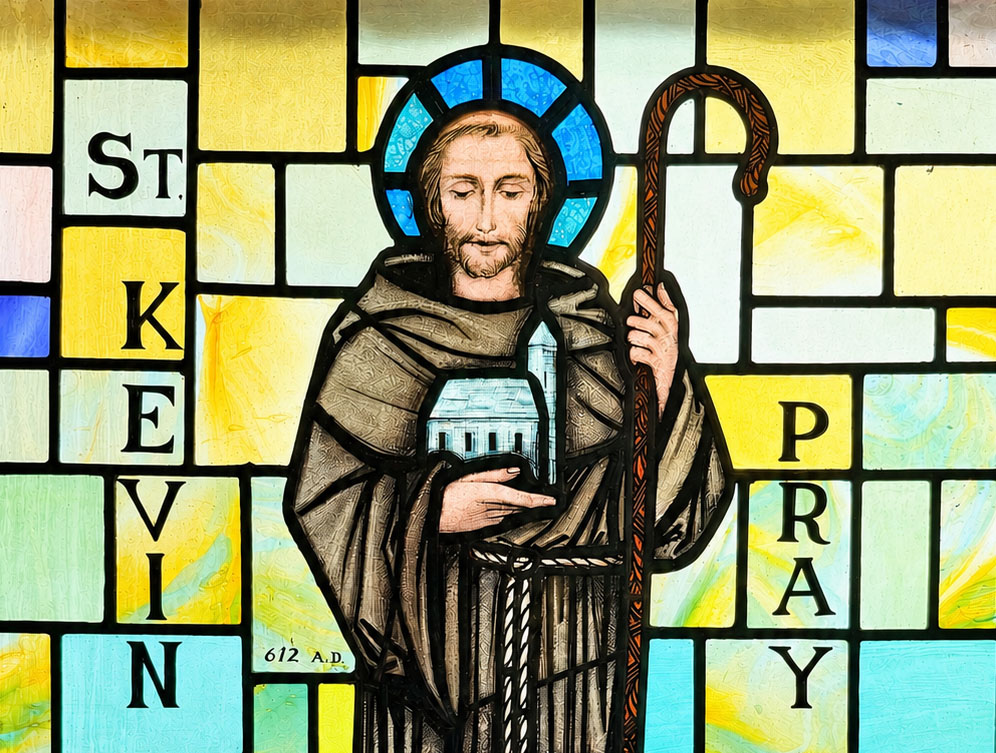
Feast of St Kevin, June 3, 2026
St Mary’s Cathedral, Dublin
Homily of Archbishop Dermot Farrell
The Hidden Life of the Church
In every parish in our diocese, there are people of deep faith and profound commitment: people whose prayer is genuine and regular, for whom the sacraments, especially the Eucharist, are places of consolation and nourishment, and whose way of living is rooted in a genuine commitment to the way of living Christ puts before the world. These might not be the words they’d use to describe themselves, but they are the living Church in our parishes. They give of their gifts to parish pastoral councils, prayer groups, youth groups, sacramental preparation groups for the children, funeral ministry, finance committees; they reach out the poor and disadvantaged in their own communities and beyond. However, this life of the Church, and this is the real life of the Church, often remains somehow hidden, not only to the world, but also to the Church itself. It is a treasure that remains hidden to us. And it is on this hidden treasure that I’d like to reflect on with you on this Feast of St Kevin today.
The Sadducees and Jesus—Two Responses to What God is Doing in the World
In today’s Gospel (Mark 12:18–27), we have an encounter between Jesus and the Sadducees. The Sadducees find their way into the Gospels, not merely as witnesses to what Jesus was involved with, but because the values they embodied were also to be found in the early Church. Saint Mark is saying to the parishes that make up his community, “Do you remember that drama between Jesus and the Sadducees in the Temple? Well, what is going on among you is exactly the same thing!”
Like the Pharisees, the Sadducees were religious people. Their forebears had rebuilt the temple in Jerusalem, and they ran it in Jesus’ day. They were the custodians of the tradition, but the Sadducees understood their faith in a very worldly way. The horizon of their faith was what they could imagine, and they imagined things in a very mundane way. The evangelists tell us, again and again, that they had no belief in the resurrection (see Mark 12:18). In other words, what was real was what they saw. Today we might say, that they had no sense of mystery. They had little sense of the possibilities or horizons of God.
In the early Church, there were many people who shared that pragmatic horizon of the Sadducees, what one might call the values of the “establishment.” If God had acted, then God had acted along the way they deemed possible and would continue to act in the way they deemed important. Their Christian ‘beliefs’ were founded on what was possible for them, not what was possible for God. Yes, they believed in Jesus, but they believed in Jesus in a very worldly way.
However, the victory of Jesus was not a victory in worldly way. The victory of Jesus was the victory of the cross. It was the victory of compassion; it was the victory of gentleness, not of brute force. It was the victory of turning the other cheek (see Matt 5:41), it was—and is—the victory of the “poor in spirit” (see Matt 5:3). It is the victory of forgiveness and patience, of littleness and simplicity, and it is costly.
Christ’s Way—Another Way of Being in the World
The victory of Christ is a victory that bears witness to another way of being in the world. The Sadducees are caught up in another victory—a victory in the past. Their forebears had returned from the exile in Babylon (597–538 BCE), rebuilt the Jerusalem temple, and in a real way, re-established the faith of their fathers, the faith of Abraham, and Isaac, and Jacob (see Gen 3:6, cf. Mark 12:26–27). That said, their horizon was in the past.
Today’s Gospel story is not really a theological argument about resurrection: it is far more an argument about what God can do. Jesus says the resurrection is beyond the Sadducees’ horizon, because they know neither the Scriptures nor the power of God. They do not know the Scriptures—the story of God with his people, and they do not know what God can do, they cannot imagine the possibilities of God.
For us today, it is not so different. In many ways we are caught up in stories of the past but have lost the “story of God.” We have lost sight of how the Lord lives and acts among his people, and how God brings the Church to life. We have lost sight of how God is and replaced the depth and dynamism of our faith with a type of nostalgia for the past. Christ’s way of being in the world bears witness to how God is, and to the very different way of living that God makes possible.
The Church God is Now Giving Us—and its Challenge
As I said at the beginning, in every parish in our diocese, there are people of deep faith and profound commitment: people whose faith is alive. All of these people have a multitude of gifts, and these gifts are often used for the good of their communities. But these gifts remain somehow hidden: some are veiled from those who use them; some are buried waiting to be brought to life. The challenge for the Church in Dublin and beyond, is welcome these gifts, and to empower people to give of their gifts. In my years as parish priest and bishop, I have seen how rich and varied and necessary those gifts are. Parishes are crying out for leadership and accompaniment in prayer groups, youth groups, in sacramental preparation for children, in funeral ministry, in outreach to the poor and disadvantaged, and that list could be expanded.
What is important is that we realise that all these gifts are there—they are actually there, and they are necessary. All are necessary. It is the People of God as a whole that has the totality of the gifts; the gifts are distributed across the Body of Christ. The challenge—the great challenge—of the Church in Dublin, and in Ireland, today is to empower people to use their gifts.
The Twofold Mission of the Church Today – The Treasure
The mission of the Church is put flesh on Christ in the world, to be his solidarity and compassion among all our sisters and brothers. Christ, and what he brings, is the huge gift God has given his people, God’s treasure for us and for the world.
But this treasure remains hidden for much of the world and also remains hidden for many who are baptised. Yes, we know that we have a treasure, but we’re unable to explore it for ourselves; it remains veiled for us. Many rely on the witness of others and have yet to taste the joy of the gospel firsthand. Many have yet to hear the Lord’s word addressed to themselves. Meeting this need is the mission of the Church; it is our urgent mission, our mission to each other and for each other. How can we offer to others what we have yet fully to taste for ourselves?
St Kevin and the Power of God
“He is God, not of the dead, but of the living,” is where Jesus brings the Sadducees. Like Patrick before him St Kevin knew firsthand the aliveness of God, God’s power, God’s possibilities, and his mystery. Kevin had found the treasure. To be true to Kevin’s heritage is not only to be inspired by his living faith, but also to allow ourselves be found by the living God, and to put others on the way that leads to being found by him and consoled by him. In very different, but no less challenging times, Kevin knew how to find a way. It is vital that we do so.
St Kevin, pray for us.
Pope St John XXIII, pray for us.
Pope St Paul VI, pray for us.
Pope St John Paul II, pray for us.
 Donate
 Volunteer
 Mass Times