Mass for Deceased Bishops and Priests
Saturday, November 7, 2026
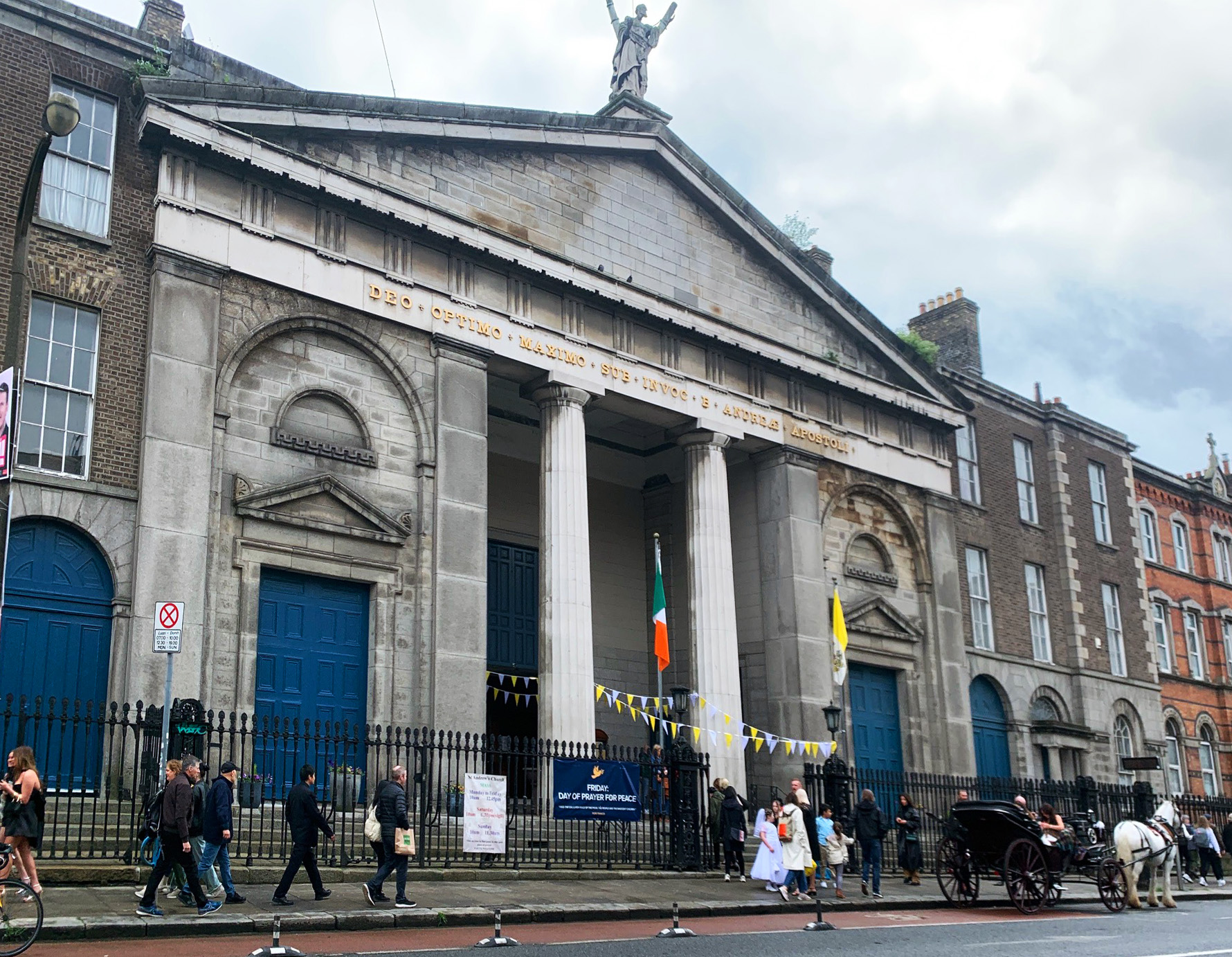
St Andrew’s Westland Row
Homily of Archbishop Dermot Farrell
We have gathered this morning to pray for the priests and bishops of the diocese – our brothers in the service of the one Lord, whom the Father has called from this life to himself. Although they left us on the day when they died, they have not disappeared. We continue to carry them with us in our hearts, and their memory remains always alive within us amid our daily lives as we wait in hope. As we pray in the Creed: “I look forward to the resurrection of the dead and the life of the world to come.” The communion of saints is our true home.
We pray especially for those who have died during the past year, the pain of whose loss is more intense for family members and colleagues. To celebrate this Mass for their eternal rest is to be consoled in the knowledge that our care for them can stretch even beyond the grave; it is to live out what St Paul put famously before the Corinthians: “three things endure: faith, hope, and love … and the greatest of these is love.” (1 Corinthians 13:8) If there is not love for our departed brothers, then what we do here is not only emptied of its significance, but, even more, it is robbed of its power, its power to save.
This salvific dimension of what we do here now lies at the core of today’s First Reading from the Second Book of Maccabees: it underlines that it is a good thing to offer prayer for our departed loved ones so that they may come to the fullness of life in God. Even more to the point, it proclaims our foundational hope in the resurrection. While the loss of our brother priests leaves a lasting mark on our hearts, our Catholic faith fills us with the profound hope of the resurrection. This hope is the cornerstone of Christian belief. The Lord whose voice is the only one that comes from the future is “the destination of our journey. Without his love, the voyage of life would become a wandering without a goal, a tragic mistake with a missed destination… The Risen One guarantees our arrival, leading us home, where we are awaited, loved and saved” (Pope Leo XIV, General Audience, 15 October 2025). Who we are is hidden in God. As expressed by St John “Beloved, we are already the children of God, but what we are to be in the future has not yet been revealed; all we know is that when it is revealed we shall be like him, because we shall see him as he really is.” (1 John 3:20) God does not forget about us when we die.
Judas Maccabaeus believes that the community to which he belongs, and to whose traditions he remained faithful, reaches beyond the grave. It is that same conviction that brings us to this Eucharist today. However, while the Maccabees saw their faith in terms of insiders and outsiders, the broader biblical witness is more embracing. The witness of the Scriptures is complex and multi-layered. We have to discern the Word within the word. The God of the Bible is an inclusive God, the Father of all who carries all, who shows mercy to all that he has created (see Jonah 4:10–11).
In this spirit, we can see how the Scriptures bear constant witness to God’s radical and unending quest for justice for all, and to God’s call for us to stand for it, too. Jesus says, “Blessed are they who hunger and thirst for righteousness”—who hunger for justice. (Matthew 5:6) These are words that have inspired the priests and bishops whose lives and ministries were a bridge for others in their meeting with Jesus Christ (see St Pope John Paul II, Apostolic Exhortation Pastores dabo vobis, 43). Doing what God wanted was their business. No doubt, it was not always easy, but they made it their business. Commitment and work for the good of others opens the gates of eternity. St Augustine put it succinctly: “If you see charity, you see the Trinity” (De Trinitate, VIII, 8, 12; Corpus Christianorum Latina 50, 287). To bow down before those entrusted to our pastoral care, especially the sick and those on the margins of society, in order to serve them is to be on the path to heaven. Indeed, it is more: it is already to taste eternal life. Like the Eucharist itself, “let faith stand forward to supply the deficiency of the senses (Tantum Ergo). “By loving your neighbour you purify your eyes so that someday you will be able to see God”, said St Augustine (Commentary on the Epistle of St John, 17,8). Love, then, is itself the bridge linking earth to heaven. To question how we love is to question how we live, it is to ask about the resurrection in our lives. Am I capable of being touched by the situation of a person in need? Can I be moved with those who are suffering? Do I pray for those whom no one thinks about? Do I help someone who has nothing to give back to me? At stake here is much more than little acts of charity; these are questions of life, questions of resurrection, resurrection lived out in us, day in day out.
In the Gospel passage we have just heard (John 11:17–27), Jesus says solemnly of himself: “I am the resurrection and the life. Those who believe in me, even though they die, will live, and everyone who lives and believes in me will never die” (11:25-26). The radiance of these words dispels the darkness of the profound grief caused by the death of Lazarus. Jesus’ words transform the situation of Martha and Mary. Martha trusts in Jesus and in his words and declares: “Yes, Lord, I believe that you are the Christ, the Son of God, the one coming into the world” (11:27). Jesus’ words make Martha’s hope pass from the distant future into the present: the resurrection is already close to her, present in the person of Christ. This is not to deny that there is yet a journey that Jesus, Martha and Mary – and even Lazarus – yet must travel. The road to the fullness of resurrection must pass through Jerusalem: there is no enduring Easter without the reality of Good Friday. “They have taken my Lord from the tomb, and I do not know where they have put him.” Martha will declare to the Risen Lord whom she does not yet recognise (John 20:16). Death disorientates. It is not until Jesus calls Mary by her name that she begins to regain her orientation in the world. She needs Jesus her friend, and the living friend of her family, to bring her to recognize her transformed world. This is the very mystery we celebrate in this Eucharist. Jesus speaks to us; he calls us by name; he points us in the direction of the life that endures.
Let us pray, then, for our brothers in the service of the one Lord, who have gone before us and who have already departed for the heavenly Homeland. May these servants of his – our brothers – now savour the joy of the gospel’s invitation: “Come, O blessed of my Father, inherit the kingdom prepared for you from the foundation of the world” (Matthew 25:34). May the Mother of God, Queen of the Saints and Gate of Heaven, intercede for our journey of holiness and for our brothers whom the Father has called from this life unto himself.
Ar dheis Dé go raibh a n-anamacha dílse
+Dermot Farrell
Archbishop of Dublin
 Donate
 Volunteer
 Mass Times